
Introduction
Air conditioners keep people nice and cool during the summer. In offices, homes, and factories, cooling devices help in temperature management, humidity control, and air quality improvement. One of the most frequently used acronyms in this area is HVAC. Grasping the HVAC full form and learning about summer air conditioning systems provide users, learners, and experts with better knowledge of contemporary cooling systems.
HVAC Full Form
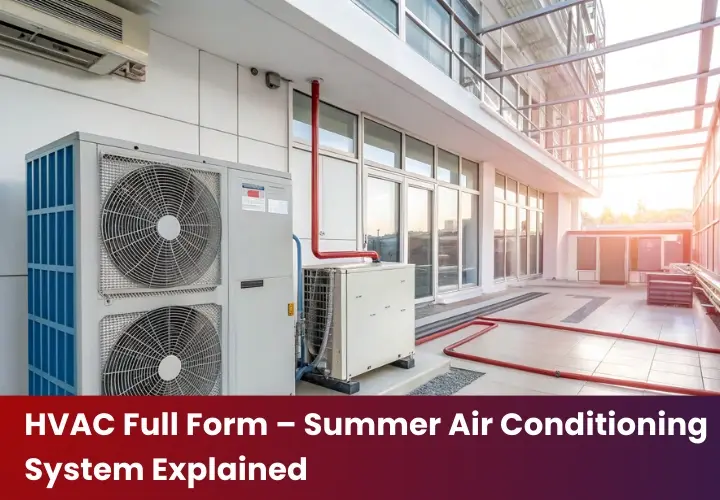
HVAC stands for heating, ventilation, and air conditioning.
It is a complete system designed to manage indoor environmental conditions. HVAC systems are used to:
- Provide thermal comfort in indoor environments
- Help provide fresh air to indoor environments
- Remove moisture, heat, and other contaminants from indoor environments
- Provide breathable and healthy indoor air
HVAC systems are used in homes, offices, hospitals, shopping malls, factories, and other commercial buildings.
What is a Summer Air Conditioning System?
A summer air conditioning system cools air indoors. It creates a comfortable thermal environment by removing heat and moisture in an indoor space.
In the summer, this system is only used in cooling mode. Other HVAC systems provide heat in winter.
Purpose of Summer Air Conditioning
The primary purposes of a summer air conditioning system include:
-
Indoor Air Cooling
-
Moisture Removal
-
Indoor air quality improvement
-
Increased comfort during outdoor heat
These systems are necessary during hot and humid weather.
How a Summer Air Conditioning System Works
The working principle of a summer air conditioning system is based on the refrigeration cycle.
Air Intake: The system draws air in from the room.
Cooling Process: The air is moved over the evaporator coil. The refrigerant makes it so that heat is absorbed.
Heat Rejection: The absorbed heat is released outside through the condenser.
Dehumidification: The moisture in the air will condense and leave.
Air Circulation: The system brings to the room air that is cool and dry.
The air conditioning system is able to keep the indoors cool and comfortable in the summer as this cycle keeps happening.
Main Components of a Summer Air Conditioning System
An air conditioning system has the following main parts :.
Compressor: Compresses refrigerant to enable heat transfer
Condenser: Releases heat to the external environment
Evaporator: Absorbs heat from the air inside the room
Expansion Valve: Regulates the flow of refrigerant
Air Filters: Remove dust and airborne particles
Each part is important to the system.
Benefits of a Summer Air Conditioning System
Using a summer air conditioning system offers several benefits:
- Maintains comfortable indoor temperatures
- Reduces humidity and prevents discomfort
- Improves indoor air quality
- Enhances productivity in workplaces
- Protects electronic equipment from heat damage
These advantages make air conditioning systems essential in modern buildings
Difference Between HVAC and Summer Air Conditioning
People often confuse summer air conditioning and HVAC systems, however, these two are different.
- HVAC is a complete system that includes heating, ventilation, and air conditioning.
- Summer air conditioning is a part of the HVAC system and focuses only on cooling and dehumidification.
In simple terms, all summer air conditioning systems are part of HVAC, but HVAC systems do more than just cooling.
Applications of HVAC and Summer Air Conditioning
HVAC and summer air conditioning systems are commonly used in:
- residential buildings
- commercial offices
- hospitals and healthcare facilities
- shopping malls
- industrial plants
Their use depends on climate, size of the building, and cooling needs.
Conclusion
Knowing the full form of HVAC and the functioning of summer air conditioning units will help you figure out what type of cooling system you need the most. HVAC systems manage the entire atmosphere indoors and are not just limited to cooling air, whereas summer air conditioners are just used to cool the indoors when the heat becomes unbearable. For summer months, to assist employees in staying healthy and productive, it is essential for a company to have a good system in place to combat the heat.